
















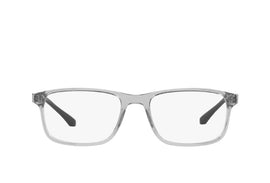
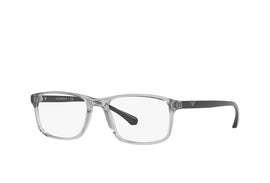


Be honest — have you ever picked a beautiful frame, only to watch your eye care expert’s face shift when they read your prescription? That polite pause usually means one thing: with regular lenses, your glasses could end up heavy. The lenses will be thick and stick out from the frame. This is exactly where the benefits of high-index lenses make all the difference. They are the quiet upgrade that let even strong prescriptions fit into slim, stylish frames, so your glasses look elegant instead of bulky.
So, are high-index lenses worth it? For most people with a moderate to high power, yes. They are thinner, lighter, and far more flattering than conventional lenses. But the honest answer depends on your prescription and your priorities - so let's walk through it the way one of our lens consultants would, in plain language.
In This Article
What Are High-Index Lenses?The Real Benefits of High-Index LensesDo You Actually Need High-Index Lenses?High-Index vs Standard LensesThe Honest Trade-OffsHow to Choose the Right High-Index LensFrequently Asked Questions
What Are High-Index Lenses?
High-index lenses are made from a denser material than standard lenses. They bend light more efficiently (refraction). Because the material does more of the work, less of it is needed to correct your vision. So the lens comes out noticeably thinner and lighter.
The "index" refers to the refractive index: how strongly the material bends light. Standard lenses usually have an index of 1.50. As that number increases — 1.53, 1.56, 1.59, 1.60, 1.67, 1.70, 1.74, 1.80, 1.90 — the lens gets progressively thinner for the same prescription.
Why does this matter for your glasses?
The higher your power, the thicker a standard lens becomes at the edges (for myopia or short-sightedness) or in the center (for hypermetropia or far-sightedness). High-index materials reduce that thickness, which is why they are the go-to recommendation for anyone whose vision needs a serious correction.
The Real Benefits of High-Index Lenses
The benefits of high-index lenses are not just cosmetic, though they certainly look the part:
- Dramatically thinner edges. A high prescription makes standard lenses so thick that they either protrude from the frame, or look like a magnifying glass. high-index lenses cut down the thickness significantly, ensuring the lenses sit neatly within the frame.
- Lighter on your face. Less lens material means less weight on your face. So your glasses stop feeling heavy or leaving marks on the bridge of your nose. Lighter frames are more comfortable for all day wear.
- Look better aesthetically. Standard lenses with high power often have concentric rings or make your eyes look shrunken or magnified. High-index lenses ensure your features stay natural, making you look better.
- Access to more frame styles. Thinner lenses open the door to delicate metal frames, large fashion shapes, and especially rimless or semi-rimless designs that may not have been able to hold a thick lens.
Optician's note: If you have ever avoided rimless or slim acetate frames because your lenses "would not work," high-index is usually the fix. The thinner edge makes it structurally possible.
Do You Actually Need High-Index Lenses? A Quick Self-Check
Not everyone needs to upgrade, and we would never tell you otherwise. The real test is your prescription strength. Run through this quick checklist; the more boxes you tick, the more the upgrade pays off:
- My prescription is stronger than ±3.00 (in either eye).
- My current lenses look thick at the edges, or my eyes look magnified/shrunken to others.
- I want a slim, large, rimless, or fashion-forward frame, but cannot choose one because of my power.
- My glasses feel heavy or leave marks by the end of the day.
- I wear my glasses most of my waking hours.
If you ticked two or more, high-index is genuinely worth exploring. If you ticked none and have a mild prescription, standard lenses may serve you perfectly well.
High-Index vs Standard Lenses: The Numbers
This is the part most people skip. Here's a clear and concise comparison of the common lens indexes and roughly who they suit. Treat the prescription ranges as a guide. Your eye care professional will confirm the right pick for your eyes.
| Lens Index | Index Categorization | Typically Suited To | Notes |
|---|---|---|---|
| 1.50, 1.53, 1.56, 1.59 | Standard to Medium Index | Mild Power (up to ~ ±3.00) | Budget-friendly option, ideal for low prescriptions |
| 1.60, 1.67 | Medium to High-Index | Moderate Power (~ ±3.00 to ±6.00) | Noticeably thinner; a great all-round choice for comfort and appearance |
| 1.70, 1.74 | High-Index | High Power (~ ±6.00 to ±10.00) | Among the thinnest and lightest lenses available; ideal for high prescriptions |
| 1.80, 1.90 | Highest Index | Very High Power (Above ~ ±10.00) | Available only in mineral crown glass and used for very high prescriptions only |
The rule is simple: higher index means a thinner lens—but usually a higher price tag too. The smart choice is selecting an index that suits your prescription, so you invest in real visual and cosmetic benefits instead of features you don't actually need.
The Honest Trade-Offs (No One Tells You These)
A good consultant highlights the trade-offs—not just the perks. High-index lenses have two important considerations worth knowing.
Slightly more reflective surfaces
High-index lens materials naturally reflect more light than standard plastic lenses. The fix is straightforward and, in our view, non-negotiable: pair high-index lenses with a good quality anti-reflection (AR) coating. It significantly reduces reflections, improves visual clarity, and makes the lenses appear almost invisible, enhancing both vision and appearance. For high-index lenses, an AR coating is a must.
A Slight Dip in Optical Clarity at the edges
Very high-index lens materials can produce a small amount of colour fringing around the edges of your vision, a phenomenon known as chromatic aberration. This effect is most noticeable in very high-index lenses, though many wearers barely notice it in everyday use. Because of this, choosing the highest lens index is not always the best option, especially for low or mild prescriptions. In these cases, a standard or medium index lens with a great coating often delivers better vision at a lower cost. This is precisely the kind of trade-off our in-store lens consultants can help you with – for free. To find the right balance between clarity, comfort, appearance, and value based on your prescription.
How to Choose the Right High-Index Lens
The best lens index isn't the highest one — it's the one that matches your prescription. If you have a mild prescription, a 1.74 index lens is unlikely to justify the extra cost. On the other hand, for strong prescriptions, moving to a higher index can make lenses noticeably thinner, lighter, and more comfortable to wear.
Once you've chosen the right index, pair it with a quality anti-reflection (AR) coating to reduce glare and reflections. Finally, choose a frame that complements both your face shape and your prescription, as frame size and shape also influence the final lens thickness.
The most reassuring way to choose is to see the difference for yourself. Choosing the right lens index doesn't have to be confusing. If you're shopping online, our experts are just a phone call away to help you compare your options. Prefer an in-person experience? Visit any of our 150+ Himalaya Optical stores across India, where our consultants can recommend the best lens index based on your prescription and lifestyle.
Frequently Asked Questions
Are high-index lenses worth the extra cost?
For moderate-to-high prescriptions, yes. They're meaningfully thinner, lighter, and more flattering, and they unlock slim and rimless frames. For mild prescriptions, the difference is small, so standard lenses often represent better value — an honest call your optician can confirm.
What is the difference between high-index and regular lenses?
High-index lenses are made of a denser material that bends light more efficiently, so less material is needed to correct your vision. The result is a thinner, lighter lens than a standard 1.50 plastic lens of the same prescription, with a more natural, less "magnified" appearance.
Do high-index lenses distort your vision?
No — they correct vision just as accurately. Very high-index materials (like 1.74) can show slight colour fringing at the very edges, but most wearers never notice it. A good anti-reflective coating further sharpens clarity and reduces glare.
What prescription needs high-index lenses?
As a general guide, prescriptions stronger than about ±3.00 start to benefit, and those above ±6.00 benefit significantly. The higher your power, the thicker a standard lens becomes — and the more a high-index upgrade improves both comfort and looks. Your optician confirms the ideal choice.
Are high-index lenses lighter than normal lenses?
Yes. Because less material is used, high-index lenses weigh noticeably less than standard lenses of the same prescription. That lighter weight means more comfort over a long day and fewer pressure marks on your nose and ears.
Do high-index lenses need an anti-reflective coating?
Absolutely. High-index materials reflect slightly more light, so an anti-reflective coating cuts glare, improves night vision, and makes the lenses look almost invisible.
The Bottom Line: A More Confident You
The benefits of high-index lenses come down to one simple promise: your strong prescription no longer has to dictate how your glasses look or feel. Thinner edges, lighter weight, all-day comfort, and the freedom to wear the frames you actually love — that's a genuine upgrade for the right wearer, not a sales tactic.
The best next step is to see the difference for yourself. Explore our lens and frames online, or visit your nearest Himalaya Optical store for a personalised fitting with a consultant who'll match the perfect lens index to your prescription. Quality you can see, expertise you can trust — find your nearest store today.
For your eye health, book a professional eye exam to keep your prescription current before upgrading your lenses.